
Why Can't The Federal Government Just Print More Money?
Keshav Chary
8/30/20262 min read

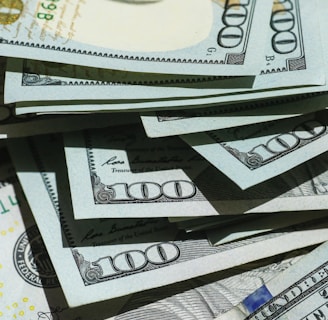
The $10 Pizza Problem
Imagine a town with 100 people and 100 pizzas available. Each person has 10 dollars so there’s $1000 circulating throughout the town. If one pizza costs 10 dollars then it's perfect, everyone gets a pizza and all the pizzas get sold. Now imagine that each person's 10 dollars magically becomes 20. There’s still only 100 pizzas but suddenly everyone has double the money that they're able to spend; if everyone pays more to make sure that they get a pizza, the price could rise to 20 dollars a pizza. That means that nobody has necessarily become richer because the worth of the money is the same as before, where 10 dollars got one pizza, now 20 dollars gets one pizza. It's more money chasing the same amount of goods.
More Money Doesn’t Equal More Things
That’s the basic principle behind inflation. When the amount of money in an economy grows faster than the amount of goods in it, then prices rise meaning the worth of the money stays the same. If demand grows without enough supply, then businesses have more reason to raise prices. Simply creating more money doesn’t create more houses, cars, workers or anything else.
Although, real-world inflation is significantly more complicated than the pizza example. Prices can rise for many reasons, including changes in consumer demand but also supply shortages, increased production costs, government policies, and other factors. The money supply being increased is only one factor. That’s why problems can't be solved by the government printing more money.
Why Not Print Just A Little More?
If printing more money were a guaranteed way for governments to make people wealthier, then there would be a surefire solution for poverty and debt- in fact, they wouldn’t exist at all. The value of money depends partly on what that money can buy. If too much money is created without a corresponding increase in economic output, then the purchasing power of each dollar goes down in relation. In other words, having 20 dollars instead of 10 doesn't mean anything if the price of everything doubles.